

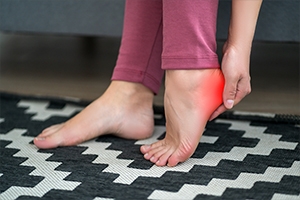
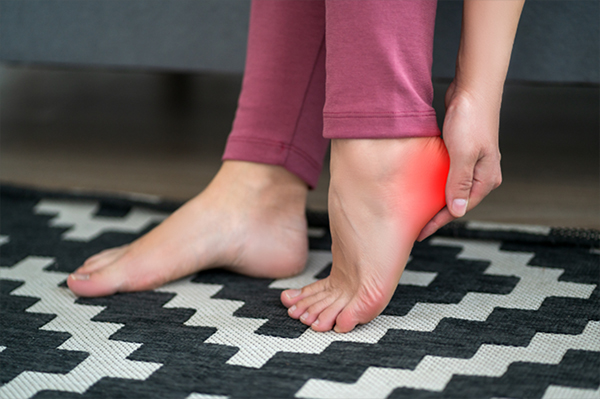
Your first step out of bed shouldn’t feel like walking on broken glass. When persistent soreness lingers despite rest and stretching, it’s easy to feel like you’ve run out of options for relief. However, modern orthopedics offers a sophisticated spectrum of care designed to get you back on your feet. Here is a look at the most advanced treatments for chronic heel pain.
Cutting-Edge Non-Surgical Therapies for Lasting Relief
When standard home remedies fail to provide results, we transition to sophisticated solutions designed to stimulate cellular healing. Shockwave Therapy (ESWT) is an effective solution, utilizing acoustic sound waves to break up scar tissue and trigger a fresh healing response in the plantar fascia. For patients seeking biological intervention, PRP (platelet rich plasma) regenerative medicine utilizes the patient’s own platelets to deliver a high concentration of growth factors directly to the site of injury. Amniotic tissue injections utilize Stem Cells to deliver highly concentrated healing cells to an area needing healthy growth factors. These biological approaches are often paired with Advanced PT/biomechanics to correct underlying movement flaws and custom orthotics that are precision-engineered to provide structural support unique to your foot's specific architecture.
Minimally Invasive Procedures for Rapid Recovery
For those who are not improving with conservative care, but wish to avoid traditional open surgery, minimally invasive technology offers a middle ground. The FAST / Tenex procedure is a prime example, using ultrasonic energy to specifically debride diseased tissue through a needle-sized incision, which significantly shortens recovery time. Similarly, the Endoscopic Plantar Fasciotomy (EPF)allows me to view the internal structures using a tiny camera, enabling a precise release of the tension in the fascia with minimal disruption to the surrounding healthy tissue. These techniques allow patients to return to their active lifestyles much faster than traditional methods, often with minimal scarring.
Comprehensive Surgical Solutions for Complex Heel Pain Cases
In cases where heel pain is a symptom of significant structural misalignment or severe tissue degeneration, a surgical approach may be the most effective path to a pain-free life. A formal plantar fascia release can address extreme tension, while nerve decompression is utilized if the pain is actually caused by trapped or pinched nerves in the hindfoot. Furthermore, addressing the back of the heel through Achilles tendon procedures or performing ankle arthroscopy when indicated ensures that every mechanical factor, from joint debris to tendon tightness, is fully resolved to prevent the pain from returning.
Chronic heel pain doesn't have to be permanent. With the right diagnosis and access to advanced treatments, most patients achieve meaningful, lasting relief. If your symptoms have persisted beyond a few months, consulting a foot and ankle specialist is the best step toward recovery.
Frequently Asked Questions
- What is the most common cause of chronic heel pain?
Plantar fasciitis is the most common cause, though Achilles tendinopathy, nerve irritation, and stress injuries can also contribute. - When should heel pain be evaluated by a specialist?
Heel pain lasting longer than a few weeks or interfering with walking, exercise, or daily activity should be evaluated. - What is shockwave therapy for heel pain?
Shockwave therapy uses acoustic waves to stimulate healing and reduce chronic inflammation in damaged tissue. - How does PRP therapy help plantar fasciitis?
PRP injections use growth factors from your own blood to support tissue repair and reduce persistent pain. - What are custom orthotics used for?
Custom orthotics help improve foot alignment, reduce stress on the plantar fascia, and support proper biomechanics. The orthotics provide an external scaffold for your foot helping to relieve stress on the internal structures that are weakened.
Reference Links:
Plantar Fasciitis - Mayo Clinic
AUTHOR: Dr. Julio C. Ortiz, DPM, FACFAS – Board-Certified Podiatric Foot & Ankle Surgeon
Julio C. Ortiz, DPM, FACFAS is a board-certified podiatric foot and ankle surgeon specializing in limb salvage, lower extremity reconstruction, and advanced foot and ankle surgery. He practices at Palm Beach Orthopaedic Institute and is recognized for his expertise in reconstructive foot and ankle procedures, diabetic limb salvage, sports medicine, and total ankle joint replacement. Dr. Ortiz is dedicated to delivering patient-centered care with a focus on restoring mobility, preserving function, and achieving the fastest and most effective recovery possible.
Credentials & Recognition
Dr. Ortiz completed his post-graduate surgical training at JFK Medical Center in Atlantis, Florida, where he served as Chief Resident during his final year. He is board-certified by the American Board of Foot and Ankle Surgery in both Foot Surgery and Reconstructive Rearfoot and Ankle Surgery and is a Fellow of the American College of Foot and Ankle Surgeons (FACFAS).
Dr. Ortiz has advanced specialty training in reconstructive foot and ankle surgery, diabetic limb salvage, adult and pediatric flatfoot correction, deformity correction, ankle arthroscopy, sports medicine, and total ankle joint replacement. As one of the few podiatric surgeons in South Florida trained in total ankle replacement, he is proficient in all major ankle replacement systems currently available in the United States.
He is an active member of the American, Florida, and Palm Beach County Podiatric Medical Associations and has contributed to the Community Education Committee of the American College of Foot and Ankle Surgeons, supporting education and advancement in podiatric medicine.
Clinical Expertise
Dr. Ortiz specializes in surgical and non-surgical treatment of complex foot and ankle conditions, including ankle arthritis, sports injuries, deformity correction, flatfoot reconstruction, diabetic foot complications, and lower extremity trauma. He emphasizes conservative treatment whenever appropriate and develops individualized care plans tailored to each patient’s condition, lifestyle, and recovery goals.
In addition to his clinical practice, Dr. Ortiz is deeply involved in podiatric education and surgical training. He serves as Adjunct Clinical Professor at Barry University School of Podiatric Medicine, Clinical Instructor at Western University of Health Sciences, and Clinical Professor at Kent State University College of Podiatric Medicine. He also serves as a teaching attending for two South Florida surgical residency programs.
Dr. Ortiz is the Residency Director for Bethesda Memorial Hospital’s three-year Reconstructive Foot & Ankle Surgery Residency Program, where he mentors podiatric residents and students while collaborating on clinical research and surgical education. He lectures nationally and locally on advanced foot and ankle procedures and serves as a consultant and faculty instructor for multiple orthopedic foot and ankle surgical technology companies and training courses.
He currently maintains staff privileges and provides emergency room coverage at JFK Medical Center and Bethesda Health.
Medical Disclaimer: This information is for educational purposes only and does not constitute medical advice. For diagnosis and treatment recommendations, please consult with Dr. Ortiz or another qualified foot and ankle specialist at Palm Beach Orthopaedic Institute.
Content authored by Dr. Julio C. Ortiz and verified against official sources.


